


Revolut Data Exposure Shows Why Crypto Security Is Also an Identity Problem
Revolut said an unauthorized party obtained sensitive customer information after fraudulent requests appeared to come from a legitimate government email domain. The development lands at a moment when crypto markets are being shaped by institutional participation, software automation and tighter regulatory expectations. That makes crypto data breach a useful case study in where the industry is heading.
Crypto Data Breach Changes the Conversation
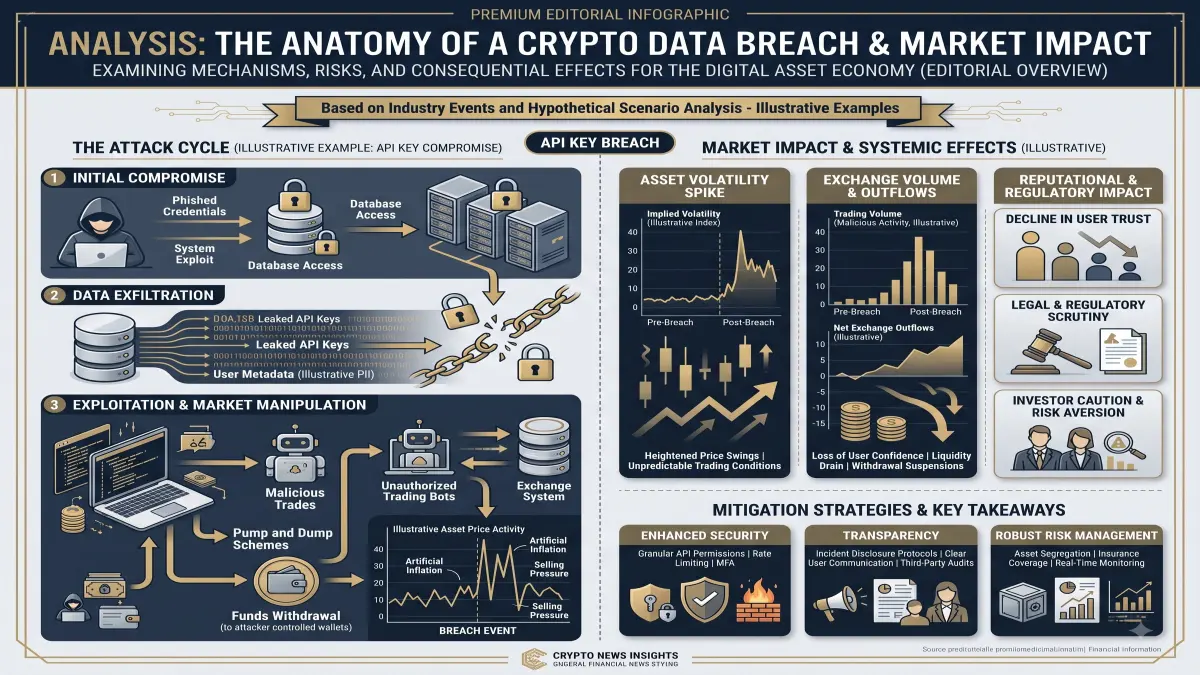
Potentially exposed data included account statements, withdrawal records and Bitcoin transaction histories. The company said customer funds and its systems were not affected. Those details matter because they define what actually changed rather than what social-media commentary may imply. The distinction is important in crypto, where an announcement can move prices before the underlying product, policy or network change has been tested at scale.
The incident illustrates that crypto security extends beyond private keys and smart contracts into identity and institutional workflows. The most useful way to read that fact is as evidence of direction, not proof of a completed transformation. Adoption, market depth, reliability and user behavior still have to validate the thesis. Trusted-channel impersonation can be especially damaging because employees may treat a legitimate-looking domain as proof of authority.
What the New Development Actually Means
For market participants, the first question is what mechanism sits underneath the headline. A new wallet control, protocol feature, regulatory step or market move matters only if it changes incentives or reduces friction. In this case, the mechanism is clear enough to identify: the development changes how participants interact with crypto infrastructure, how risk is allocated, or how capital can move. That makes it more consequential than a short-lived price reaction.
The second question is scale. Crypto projects frequently announce products that sound large before they have meaningful usage. The stronger signal comes later, when users keep using the product without unusual incentives, when counterparties integrate it, or when regulators and institutions build processes around it. That is why early data should be treated as a starting point. A strong first print can establish relevance, but it cannot establish permanence.
There is also a competitive dimension. Crypto infrastructure is increasingly converging with traditional finance, payments, cloud software and cybersecurity. Companies that can make blockchain features easier to use may gain an advantage, but they also inherit expectations from mature industries. Reliability, customer protection, auditability and clear permissions become as important as transaction speed. The winners will likely be the systems that combine crypto-native flexibility with controls familiar to professional users.
The Risk the Headline Does Not Solve
The development does not remove the underlying risks. Trusted-channel impersonation can be especially damaging because employees may treat a legitimate-looking domain as proof of authority. A product can be technically sound and still fail commercially. A regulatory framework can be clearer and still impose costs that change who can participate. A market rally can be strong and still reverse when liquidity or sentiment shifts.
For investors, that means the responsible response is to separate confirmed facts from interpretation. The verified event is the starting point. The market impact is an analytical question. Longer-term adoption is a projection. Keeping those categories separate helps prevent a promising development from being mistaken for a guaranteed outcome.
What to Watch Next for Crypto Data Breach
The next evidence should come from measurable follow-through. That can include new users, transaction volumes, integrations, regulatory filings, additional counterparties, sustained liquidity or a second round of technical changes. If those signals strengthen, the development becomes easier to treat as structural. If they fade, the original headline may prove more important as a moment in crypto history than as a lasting market catalyst.
For now, the best conclusion is measured rather than promotional. The development is relevant, but its ultimate importance depends on what happens after the announcement. Crypto markets have repeatedly shown that the gap between a compelling narrative and durable adoption can be large. Readers should therefore track the evidence, not just the headline.
The broader lesson is that crypto adoption is increasingly being decided at the infrastructure layer. Faster settlement, better controls, interoperable wallets, clearer rules and deeper liquidity can matter more over time than a single token narrative. That is why developments like this deserve attention even when they do not immediately produce a dramatic price move. The durable impact will be measured by whether other companies, developers and users begin building around the change.