


AI Agents Are Becoming a Blockchain Infrastructure Problem, Not Just an App Feature
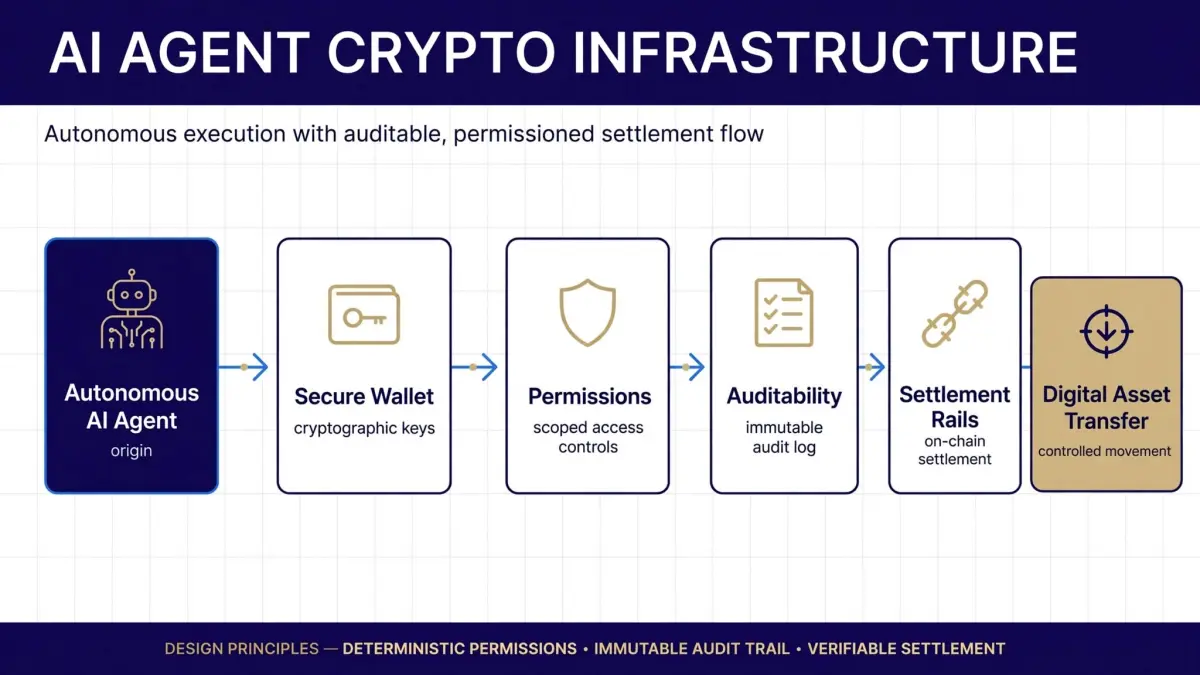
AI Agents Are Becoming a Blockchain Infrastructure Problem, Not Just an App Feature is about why autonomous software needs wallets, permissions, auditability and settlement rails when it starts moving digital assets. The immediate facts matter, but so does the context around them. Circle launched Arc with a policy-controlled Agent Stack designed for agent wallets and programmable financial activity. This article separates what has been confirmed from what remains interpretation, then looks at the practical questions for readers, builders and market participants.
The agent wallet is becoming a new security boundary
Circle launched Arc with a policy-controlled Agent Stack designed for agent wallets and programmable financial activity. The development should be read against the broader structure of the digital-asset market. Arc uses USDC as native gas, giving applications and agents a predictable settlement asset inside the network. That does not prove a direct causal relationship, but it explains why the story is receiving attention now. Markets price several variables at once, and a single headline is rarely the whole explanation.
Why permissioning matters
Arc uses USDC as native gas, giving applications and agents a predictable settlement asset inside the network. There is an important distinction between an announced capability and a mature market outcome. The central crypto question is not whether an agent can sign a transaction, but whether it can do so inside enforceable limits with auditable permissions. The next test is execution: whether the system works under real demand, whether participants continue using it after launch attention fades, and whether surrounding infrastructure develops enough depth to support repeat activity.
Stablecoins give agents a settlement rail
The broader enterprise AI market is also focusing on machine identities, least-privilege permissions and continuous monitoring as agents gain access to systems. For readers, the useful question is what can be verified today. Arc uses USDC as native gas, giving applications and agents a predictable settlement asset inside the network. Everything beyond that belongs in the analysis column rather than the confirmed-fact column. That distinction is especially important in crypto, where announcements can move prices before the underlying product, rule or network change has been tested at scale.
The infrastructure still needs human controls
The central crypto question is not whether an agent can sign a transaction, but whether it can do so inside enforceable limits with auditable permissions. The development should be read against the broader structure of the digital-asset market. Circle launched Arc with a policy-controlled Agent Stack designed for agent wallets and programmable financial activity. That does not prove a direct causal relationship, but it explains why the story is receiving attention now. Markets price several variables at once, and a single headline is rarely the whole explanation.
What to watch next
The next phase will be determined by evidence rather than headlines. For this story, the most useful signals are changes in real usage, liquidity, regulatory implementation, developer activity, market participation and the behavior of the underlying assets. Circle launched Arc with a policy-controlled Agent Stack designed for agent wallets and programmable financial activity. Readers should also check the primary documents linked in the sources section when a claim has legal, technical or financial significance.
The takeaway
The central point is straightforward: why autonomous software needs wallets, permissions, auditability and settlement rails when it starts moving digital assets. The confirmed record provides the foundation, while market interpretation should remain conditional. Arc uses USDC as native gas, giving applications and agents a predictable settlement asset inside the network. As new data arrives, the story may evolve, and that is normal in a fast-moving market. UnmaskCoins treats the article as a dated research snapshot rather than a prediction of certainty.